
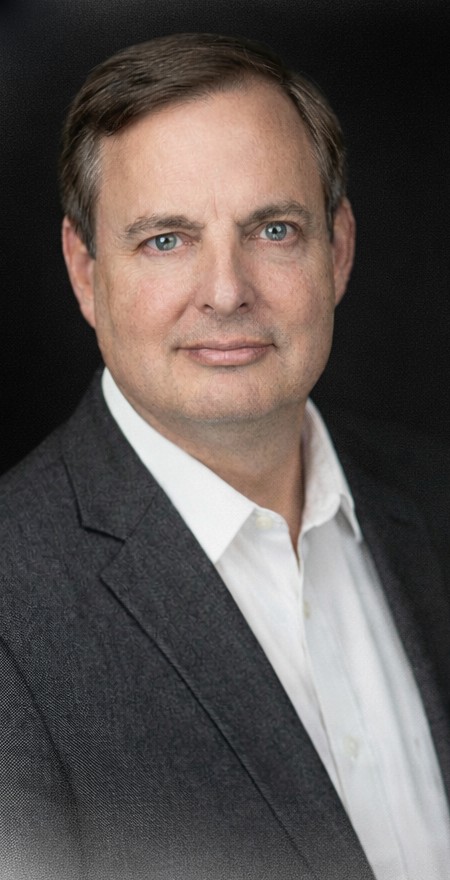
Social Security Vocational Expert · Founder, Precision Case Lens · Published September 24, 2026
Short answer: At step five, the question is whether a significant number of jobs exist that the claimant can do (20 CFR 404.1566). Off-task time and absences often decide the vocational expert’s answer, but they only reach the hypothetical if the record supports them: documented symptoms and their frequency, treating-source opinions on time off task and attendance, and descriptions from people who see the claimant.
At a glance
| The rule | RFC is work activity on a regular and continuing basis (20 CFR 404.1545(b)-(c)) |
| Step five | Jobs in significant numbers the claimant can do (20 CFR 404.1566) |
| What carries the limitation | Frequency in treatment notes, source opinions, third-party descriptions |
| Common gap | Symptoms documented, but no opinion on time off task or absences |
| Who decides what to argue | The representative of record |
Why sustainability is a vocational question
An RFC is not only a list of lifting and standing limits. Section 404.1545 describes it as the most a person can still do despite limitations, assessed for work activity on a regular and continuing basis, for both physical and mental abilities. A claimant who can perform the tasks of a simple job for an hour may still be unable to perform them across a workday and a workweek.
At step five, 404.1566 asks whether work exists in significant numbers having requirements the claimant can meet. Employers expect people to show up and stay on task. When a hypothetical adds time off task or a number of absences, the vocational expert’s answer about available jobs can change. When the hypothetical leaves them out, it usually does not.
What the record usually has, and what it lacks
| What is often in the file | What is often missing |
|---|---|
| Notes that mention migraines, flares, panic or fatigue | How often they happen and how long they last |
| A list of appointments | Whether the appointments themselves would cause missed work |
| A diagnosis and a medication list | Side effects that affect attention or alertness |
| An opinion that the claimant cannot work | An opinion on time off task and expected absences in plain terms |
| The claimant’s testimony | Statements from family or others who see the pattern over time |
These are illustrative categories, not results from a real case.
What builds an off-task or attendance limitation
- Frequency in the treatment notes. A note that records how many episodes in the past month carries more than a note that says symptoms are “ongoing.”
- A treating-source statement that answers the question. Ask the source directly about time off task and expected absences, and ask for the findings the answer rests on.
- Consistency across the file. For claims filed on or after March 27, 2017, supportability and consistency are the most important factors SSA considers under 20 CFR 404.1520c when it evaluates the persuasiveness of a medical opinion. An attendance opinion that matches the treatment notes is stronger than one that stands alone.
- Third-party descriptions. SSA considers descriptions of limitations from the claimant, family, neighbors, friends and others (404.1545(a)(3)).
How a vocational expert reads the same record
A vocational expert at a hearing answers the hypothetical the judge poses. Someone who has sat in that chair reads a file for the limitations that will change the answer, and for whether the record will hold them up. That is the lens behind Precision Case Lens. It is built by a Social Security vocational expert: Certified Rehabilitation Counselor since 1996, Social Security vocational expert since 2014.
Where Precision Case Lens fits
Case Development shows what the file supports, what is inconsistent and what is missing, including whether any source has documented how often symptoms occur or addressed time off task and attendance. Where something is missing, the Cure Plan lays out the client interview questions and the treating-source requests that close the gap, cited to the exhibit and page. The Hearing Prep Blueprint then brings RFC-mismatch flags, grid scenarios, bridged hypotheticals where the record supports them, and suggested questions for the vocational expert.
Frequently Asked Questions
Why do off-task time and absences matter at a hearing?
Because the residual functional capacity is an assessment of work activity on a regular and continuing basis (20 CFR 404.1545(b) and (c)). A person who can do the tasks of a job but cannot stay on task or attend reliably may not be able to sustain it. The vocational expert addresses that when the hypothetical includes the limitation.
Where should an off-task or absence limitation come from?
From the record: treatment notes that document the symptoms and their frequency, medical source statements that address time off task and expected absences, and descriptions from the claimant, family and others, which SSA considers under 404.1545(a)(3).
Can the representative add the limitation at the hearing?
The representative can pose additional hypotheticals to the vocational expert, but a limitation the record does not support is easy for the judge to set aside. That is why the development work comes first.
Does Precision Case Lens tell the firm what percentage to argue?
No. Precision Case Lens flags what the record documents on time off task and attendance, and what is missing, cited to the exhibit and page. The representative of record decides what to argue. Precision Case Lens does not predict or promise outcomes.
Precision Case Lens does not predict or promise outcomes.
See what your record supports before the hearing
Pick hearing-stage files you already know, run them, and compare the cited Blueprint to your own preparation.
Run it on your own cases: take the PCL Challenge Free Trial. Each trial run returns a Premium Hearing Prep Blueprint.
Take the PCL Challenge Free TrialSee a Developed Case — Free DemoFour trial runs on four separate cases. A signed Business Associate Agreement is required before any file is uploaded. No login required to view the demo. Learn more at precisioncaselens.com.
This article is general information for disability representatives, not legal advice. Precision Case Lens works for the representative; it does not represent claimants and does not guarantee outcomes.